10 essential accessories for split AC installation in 2025

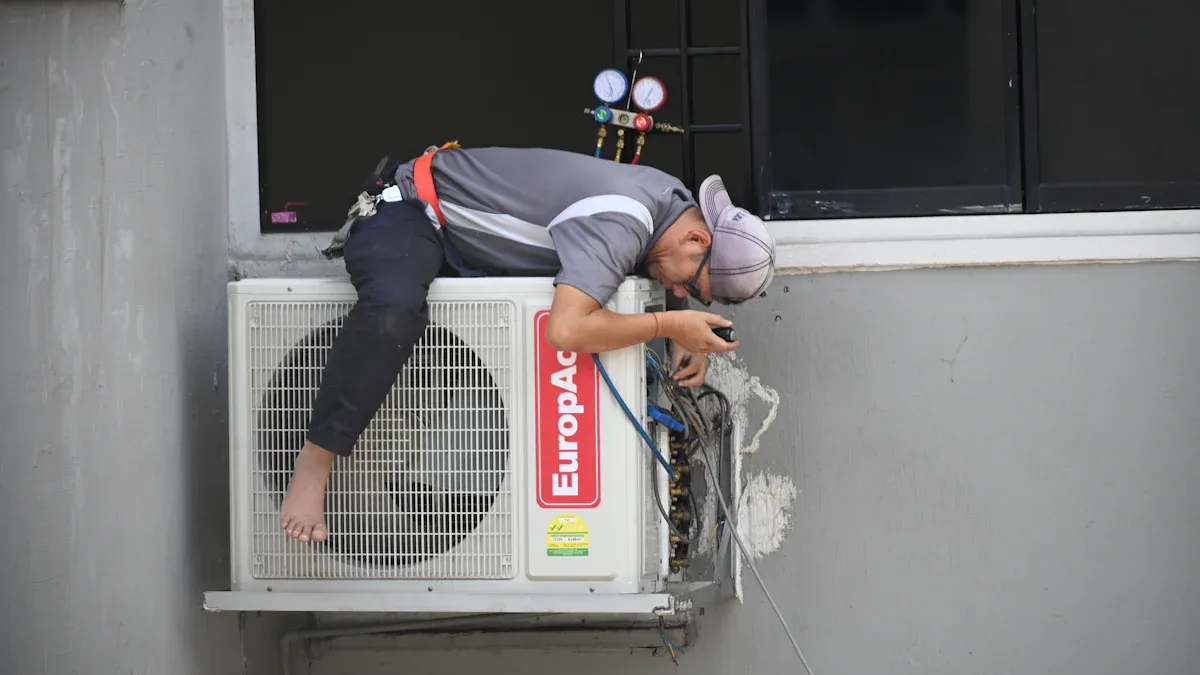
Choosing the right tools for split AC installation accessories in 2025 is key. As air conditioners get smarter and better, these accessories matter more. They make cooling stronger, save power, and help ACs last longer. Installing them? It becomes simpler too.
Key Takeaways
Mounting brackets keep the AC steady and improve airflow. They stop damage and help the AC work better.
Strong copper pipes with insulation improve cooling and save power. They keep the temperature steady and avoid harm to the AC.
Smart AC controllers let you control the AC from far away. They save energy, lower bills, and give maintenance warnings.
Mounting Brackets

Why mounting brackets are important
Mounting brackets are very important for split AC setup. They hold the air conditioner steady and in place. Without them, the unit might shake or move a lot. This can cause noise and damage over time. Brackets also help air flow and drain water properly. This stops water from collecting and harming the AC. They also follow safety rules, so you don’t need to worry about breaking building codes.
If you’re setting up a split AC, brackets are a must-have. They help your air conditioner work better and last longer.
Tips for picking strong and fitting brackets
When choosing brackets, strength should be your main focus. Pick ones made of rust-proof materials like stainless steel or coated metal. These materials can handle bad weather and won’t break easily.
It’s also important that the brackets fit your AC. Check if they match the size and weight of your unit. Some brackets have adjustable rails, making installation easier and more accurate.
Here’s a simple guide to what makes a good mounting bracket:
Feature | What It Does |
|---|---|
Strong Stability | Special rail design reduces shaking, keeping the AC quiet and steady. |
Good Ventilation & Drainage | Helps air flow and drains water, stopping damage from water buildup. |
Safe and Approved | Follows safety rules and meets building code requirements. |
Picking the right brackets isn’t just about safety—it helps your split AC work its best.
Insulated Copper Pipes
Why good copper pipes help your AC cool better
High-quality copper pipes make your AC work much better. They move heat quickly, so your room cools faster and more evenly. Copper is also strong and lasts a long time, keeping your AC running well for years.
Here’s why copper pipes are a smart choice:
They stop heat loss, helping your AC use less energy.
They save power, which lowers your electricity bills.
They reduce noise, making your AC quieter while it works.
Using good copper pipes doesn’t just improve cooling. It also saves you money and makes your home more comfortable.
Why insulation is key to saving energy
Insulation is very important for your AC system. Without it, copper pipes can lose or gain heat, making your AC work harder. This uses more energy and raises your bills.
Insulated pipes keep the refrigerant at the right temperature. This helps your AC cool your room faster and more evenly. Insulation also stops water drops from forming, which can cause rust or mold. In very hot or cold places, it protects pipes from freezing or overheating.
Here’s how insulation helps your AC:
Cuts down energy loss, saving you money on bills.
Stops damage from water and harsh weather.
Makes your AC last longer by protecting the pipes.
Choosing insulated copper pipes is a smart move for your split AC setup. It’s a small upgrade that makes a big difference in performance and durability.
Flexible Drain Pipes
How drain pipes stop water leaks
Drain pipes help your split AC work well by removing water. This water forms during cooling and needs to be carried away. If not, it can pool near the AC and cause damage. Leaking water might harm walls or floors and lead to mold.
Flexible drain pipes are very helpful for tricky setups. They bend easily to fit tight spaces or odd angles. This makes installation simpler and reduces blockages. Water flows smoothly, keeping your AC safe.
Tip: Check your drain pipes often for clogs or cracks. Fixing small issues early can save you from big repairs later.
Picking strong pipes that last
Choosing the right drain pipe is about more than fitting your AC. The pipe’s size and material affect how well it handles water and lasts over time.
Here’s a table comparing common pipe materials:
Pipe Material | Why It’s Good |
|---|---|
PVC | Light, flexible, doesn’t rust, and affordable. |
HDPE | Tough, flexible, resists rust, great for uneven ground. |
Concrete | Strong but can break if the ground shifts. |
Clay | Hard but cracks easily under pressure. |
PVC and HDPE pipes are top picks for split AC setups. They’re strong, easy to use, and handle pressure well.
Make sure the pipe size matches your AC’s drainage needs. A pipe too small can cause water backups. A pipe too big may drain poorly. The right size keeps water flowing and avoids problems.
Note: Flexible pipes made of PVC or HDPE work best for modern ACs. They’re durable and bendable, making them great for long-term use.
Voltage Stabilizer
Keeping your AC safe from voltage changes
Voltage changes can harm your split AC. If the voltage gets too low or too high, your AC may stop working well. It could even overheat or break completely. A voltage stabilizer helps prevent these problems.
A stabilizer acts like a shield for your AC. It keeps the voltage steady so your unit works smoothly. For instance, if the voltage drops to 180V, the stabilizer raises it to 220V-240V. If the voltage rises to 260V, it lowers it to protect your AC.
Here’s how stabilizers manage voltage changes:
Voltage Condition | Effect on Appliances | Voltage Stabilizer Action |
|---|---|---|
Voltage drops to 180V | Appliances may not work properly | Raises voltage to 220V-240V |
Voltage spikes to 260V | Risk of overheating or damage | Lowers voltage to safe levels |
Adding a stabilizer during installation protects your AC. It also helps your unit perform better and last longer.
What to look for in a stabilizer
Not all stabilizers are the same. Modern ones have features that make them better and easier to use. Here are some important features:
Digital Display: Shows voltage levels clearly.
Compatibility: Works with ACs up to 1.5 or 2.0 tons.
Enhanced Protection: Guards your AC from voltage spikes.
Here’s a table of advanced stabilizer features:
Feature | Description |
|---|---|
Protection for 120/240VAC | Works with different HVAC systems, keeping voltage steady. |
Auto-calibration | Adjusts to voltage changes automatically, no manual setup needed. |
Surge Protection | Protects against sudden voltage spikes. |
Diagnostic LEDs | Lights show current voltage status for easy monitoring. |
Durable Enclosure | Strong case built to handle tough outdoor conditions. |
Choose a stabilizer with these features to keep your AC safe. A good stabilizer not only protects but also makes using your AC easier.
Smart AC Controllers
Making AC control easier and saving energy
Smart AC controllers help you manage your air conditioner easily. You can control it from anywhere using your phone. Turn it on or off, change the temperature, or check how it’s working—all remotely.
These controllers don’t just make things simple; they save energy too. For example, smart controllers like Air-Econ show how much power your AC uses. They also warn you about possible problems. This helps you use less energy and spend less money.
Did you know air conditioners use 6% of all U.S. electricity? Smart controllers can lower this number. They adjust your AC to keep you cool while using less power. When your room is cool enough, the controller slows the AC down. This saves energy and keeps your bills low.
Tip: Adding a smart AC controller during installation improves cooling and saves money.
Key features of smart controllers for today’s ACs
Modern smart AC controllers have many helpful features. Here’s what to look for:
Remote Access: Use your phone to control your AC anywhere.
Energy Insights: See how much power your AC uses and save energy.
Scheduling Options: Set timers to turn your AC on or off automatically.
Comfort Optimization: Adjust settings based on room temperature and humidity.
Maintenance Alerts: Get warnings about problems before they get worse.
These features make your AC smarter and your life easier. A smart controller gives you better cooling, lower costs, and fewer repairs.
Note: A smart AC controller is a small upgrade with big benefits. It’s great for modern ACs and improves your setup.
AC Outdoor Unit Stand
Why a strong stand is important for the outdoor unit
A strong stand is very important for your AC’s outdoor unit. It keeps the unit steady and stops it from shaking too much. Without a good stand, the unit might wobble, causing noise or damage over time. A sturdy stand also lifts the unit off the ground. This protects it from dirt, water, and pests.
Did you know airflow helps your AC work better? A good stand improves airflow around the outdoor unit. This helps the AC cool faster and use less energy. It also makes the AC last longer by reducing strain on the system.
Tip: Make sure your outdoor unit sits on a flat, stable surface. This helps it run smoothly without problems.
How to pick a weather-proof stand
When buying a stand, pick one that can handle bad weather. Look for stands made of materials like galvanized steel or coated metal. These materials resist rust and stay strong in rain, heat, or cold.
For example, the BSAC Floor Stand is made of tough, weather-proof materials. It stays stable and improves airflow for better cooling. Another option is the Zigma Outdoor Unit Support. It’s durable and helps the AC cool more efficiently by boosting airflow.
Here’s what to check when choosing a stand:
Material: Pick rust-proof and weather-resistant materials.
Design: Choose stands that allow good airflow and drainage.
Weight Capacity: Make sure the stand can hold your AC’s weight.
Getting a strong stand protects your AC and helps it work better. It’s a small but smart choice for long-term use!
HVAC UV Lights
Keeping air clean by stopping mold and germs
HVAC UV lights help keep your indoor air clean and safe. These lights use UV-C rays to kill mold, bacteria, and viruses. They stop harmful germs from growing or spreading in your home.
UV-C light kills germs by breaking their DNA and proteins. This stops them from growing or causing sickness.
If someone in your home has a weak immune system, UV lights are very useful. They lower the number of germs in the air, making it healthier to breathe. For the best results, use UV lights along with regular HVAC maintenance.
How UV lights help your HVAC system
UV lights do more than clean the air—they also protect your HVAC system. Studies show UV-C light removes over 99% of germs on cooling coils and air ducts. Clean coils improve airflow, reduce strain, and save energy.
Research from Penn State shows UV-C light cleans coils and ducts well. Sensors found better airflow and less pressure after using UV lights. This means your system works better and uses less energy.
Adding UV lights to your HVAC system is a smart idea. They stop mold and dirt from blocking your ducts and coils. This reduces cleaning needs and helps your system last longer.
Extra Air Filters
Why clean air and good performance matter
Extra AC air filters help your split AC work better. They trap dust, pollen, and dirt to keep the air clean. This makes your home healthier and more comfortable.
Dirty filters can block airflow and make your AC work harder. This lowers efficiency and uses more energy. Replacing or adding filters often keeps airflow smooth and saves power.
Here’s why extra filters are useful:
HEPA filters catch tiny particles like mold and bacteria.
Filters with high MERV ratings remove more dirt and allergens.
Clean filters stop allergens, helping people with allergies breathe easier.
Tip: Check filters monthly. Replace dirty ones to save energy and improve air quality.
Picking the best filters for your system
Choosing filters isn’t just about size. You need ones that fit your AC and clean the air well.
Here’s a simple guide to filter types:
Filter Type | What It Does | MERV Rating Range |
|---|---|---|
Fiberglass | Catches big particles; basic option. | 1-4 |
Pleated | Made of paper or fabric; traps more dirt. | Varies |
HEPA | Removes very small particles; super effective. | 16 or better |
For cleaner air, pick filters with MERV 13 or higher. These catch tiny germs and dirt that basic filters miss. HEPA filters are the best for top air quality.
Note: Use MERV 7 filters first and MERV 14 filters second. This combo removes up to 98% of dirt and germs. It’s great for homes in polluted areas or for allergy sufferers.
Adding extra filters improves air quality and helps your AC run smoothly. It’s a small upgrade with big benefits.
Coil Cleaning Liquid
Why clean coils help your AC work better
Cleaning your AC coils is an easy way to keep it working well. Dirty coils make your AC use more energy, which raises your bills. Clean coils help your AC cool your home faster and save power.
Clean coils also make the air in your home healthier. Dust and dirt on coils can spread through your house and cause allergies. Using coil cleaning liquid removes dirt and gives you fresher air.
Here’s how clean coils help your AC:
Benefit | What It Does |
|---|---|
Better Efficiency | Saves up to 30% energy |
Longer AC Life | Helps AC last longer |
Lower Energy Bills | Cuts electricity costs |
Cleaner Indoor Air | Improves air quality |
Cleaning coils isn’t just about saving money. It makes your home comfy and keeps your AC working well for years.
Steps to use coil cleaning liquid
Using coil cleaning liquid correctly helps your AC perform better. Follow these simple steps:
Regular Cleaning: Clean coils as part of your AC care routine. This keeps your AC in good shape all year.
Safe Products: Use gentle cleaning liquids that don’t harm the coils. Avoid sprays that might damage them.
How Often: Clean coils once or twice a year. If your area is dusty, clean them more often.
Track Results: Write down when you clean and check if cooling improves. Cleaning can boost efficiency by 16%.
Tip: Always turn off your AC before cleaning. This keeps you safe and protects the system.
By following these steps, you’ll keep your AC running smoothly and avoid expensive repairs. A little care goes a long way!
Surge Protector
Keeping your AC safe from power surges
Power surges can harm your split AC badly. These sudden voltage spikes happen due to overloads, faulty wiring, or utility issues. Without protection, your AC parts might overheat or stop working.
Did you know surges can reach 6,000 volts and 3,000 amperes? That’s enough to destroy your AC circuits in seconds. Surges can also carry up to 90 joules of energy, causing costly repairs or replacements. A surge protector absorbs this extra energy before it damages your AC.
Adding a surge protector during setup is a smart idea. It protects your AC from voltage spikes and saves you money on repairs.
Tip: Check your home’s wiring and electrical load to lower surge risks.
What to look for in a surge protector
Not all surge protectors work the same. To protect your AC, choose one with these features:
Feature | What It Does |
|---|---|
Response Time | Reacts quickly, ideally in less than a nanosecond. |
Clamping Voltage | Lower values (400 volts or less) block excess voltage faster. |
Joule Rating | Higher ratings (600 joules or more) absorb more energy and last longer. |
UL Certification | Ensures safety and quality. Look for UL Standard 1449 (second edition or newer). |
Indicator Lights | Shows if the protector is working or needs replacing. |
Picking the right surge protector keeps your AC safe and efficient. It’s a small cost that prevents big expenses later.
Note: Surge protectors with higher joule ratings last longer and protect better. Always check the specs before buying.
Getting the right accessories for your split AC is very important. These items help your AC cool better, use less energy, and last longer. Tools like smart controllers, UV lights, and extra filters keep your AC running well and your home cozy.
When picking a split AC for your house, don’t forget these extras. They make setup easier and help your system work smoothly. From coil cleaners to sturdy stands, these tools protect your AC and save money over time.
Tip: Focus on these accessories for easy cooling and to make your AC the best choice for your home.
FAQ
Why is a voltage stabilizer important?
Skipping a stabilizer can harm your AC during voltage changes. Stabilizers keep the voltage steady, helping your AC last longer. They’re affordable and very useful.
How often should air filters be changed?
Change air filters every 1-3 months. In dusty places or if you have allergies, check them monthly. This keeps the air clean and your AC working well.
Are smart AC controllers useful?
Yes! They let you control your AC from your phone. They save energy, lower bills, and are easy to use in modern homes. 🌟
Tip: Make sure accessories match your AC before buying. This avoids problems and saves time.
See Also
Exploring 5 Key Advantages of Copper Tubing for AC Units
Simple Guide to Professionally Installing Copper AC Tubes
Five Strategies to Reduce Costs on Copper AC Tubing

© Copyright 2024 Dongguan Baoyuan Refrigeration Parts Co.,Ltd - All Rights Reserved.
